
Fresh Basil Pesto
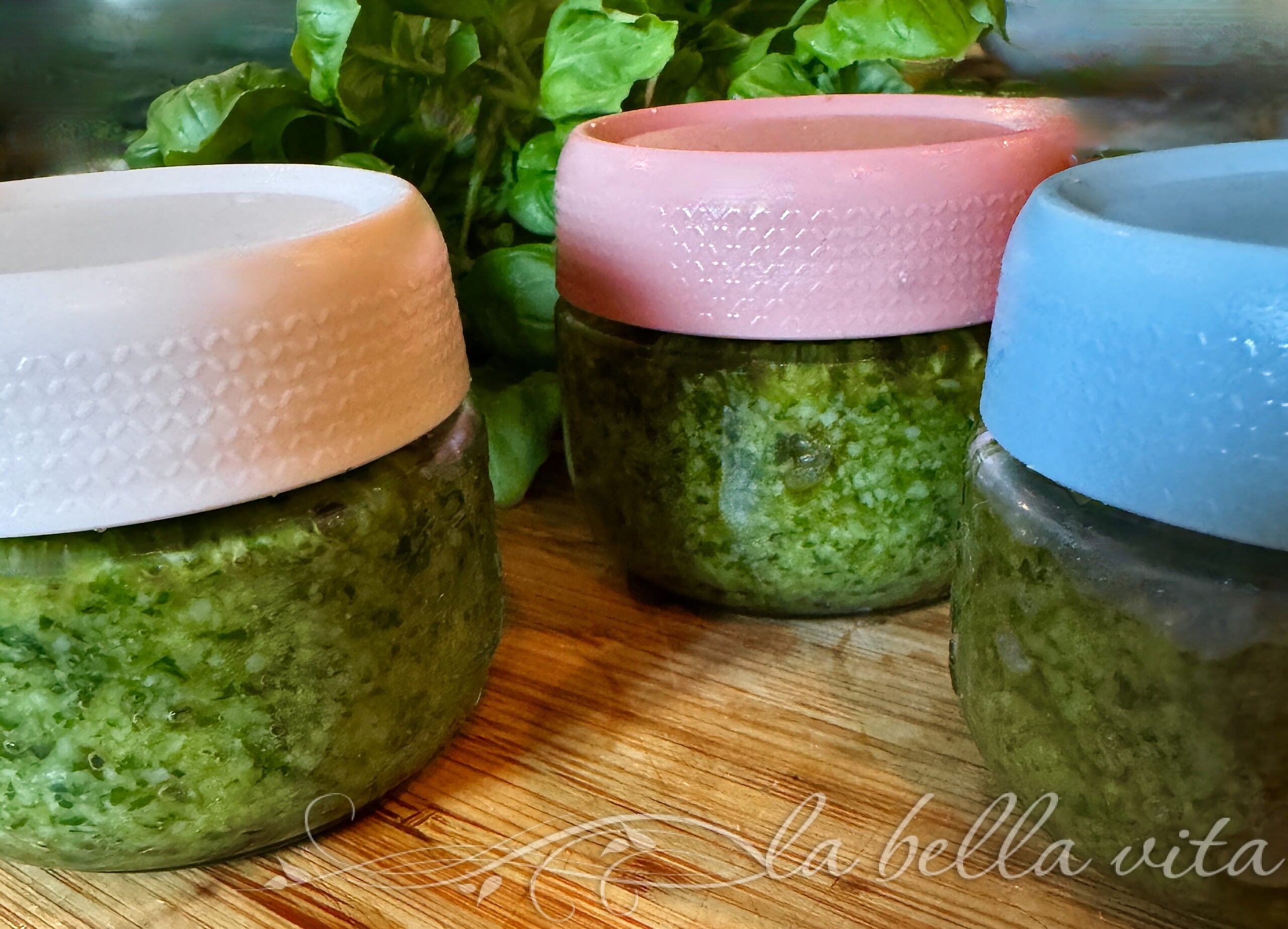
Over the weekend, I harvested basket after basket of basil and made my second batch of Fresh Basil Pesto!
Rich, green, earthy, and wonderfully aromatic, this Italian staple can turn the simplest bowl of gnocchi, pasta, or polenta into something absolutely delicious.
But honestly, one of my favorite ways to enjoy it is to simply spread a spoonful over a slice of toasted Italian bread. It’s delicious added to a baked potato or sandwich/panino, served alongside steak, chicken, or fish, or stuffed into cherry tomatoes (see my video). There are endless ways to enjoy this fresh taste of summer!
And the best part? Pesto is incredibly easy to make and freezes beautifully!
Traditional pesto is made with Genovese basil, but it’s ok to use other varieties of basil. The most important thing is to make sure your basil leaves are completely dry. Any lingering water will cause the pesto to spoil more quickly.
Make sure that you have plenty of olive oil. Once your pesto is prepared, pour a thin layer over the surface before storing or freezing it. This helps preserve its gorgeous green color and protects it from browning and freezer burn.
Fresh, fragrant, and bursting with summer flavor—what’s not to love about basil pesto?
Watch my Video:
Fresh Basil Pesto & Stuffed Cherry Tomatoes
Classic basil pesto, pesto alla Genovese, comes from Genoa, the capital of Liguria in northwestern Italy. Even its name tells us how it was traditionally prepared. The word pesto comes from the Italian verb pestare, meaning “to pound” or “to crush,”.
As the basil, garlic, pine nuts, and cheese are slowly crushed together, their aromas begin to blend perfectly. Fresh basil pesto smells heavenly!
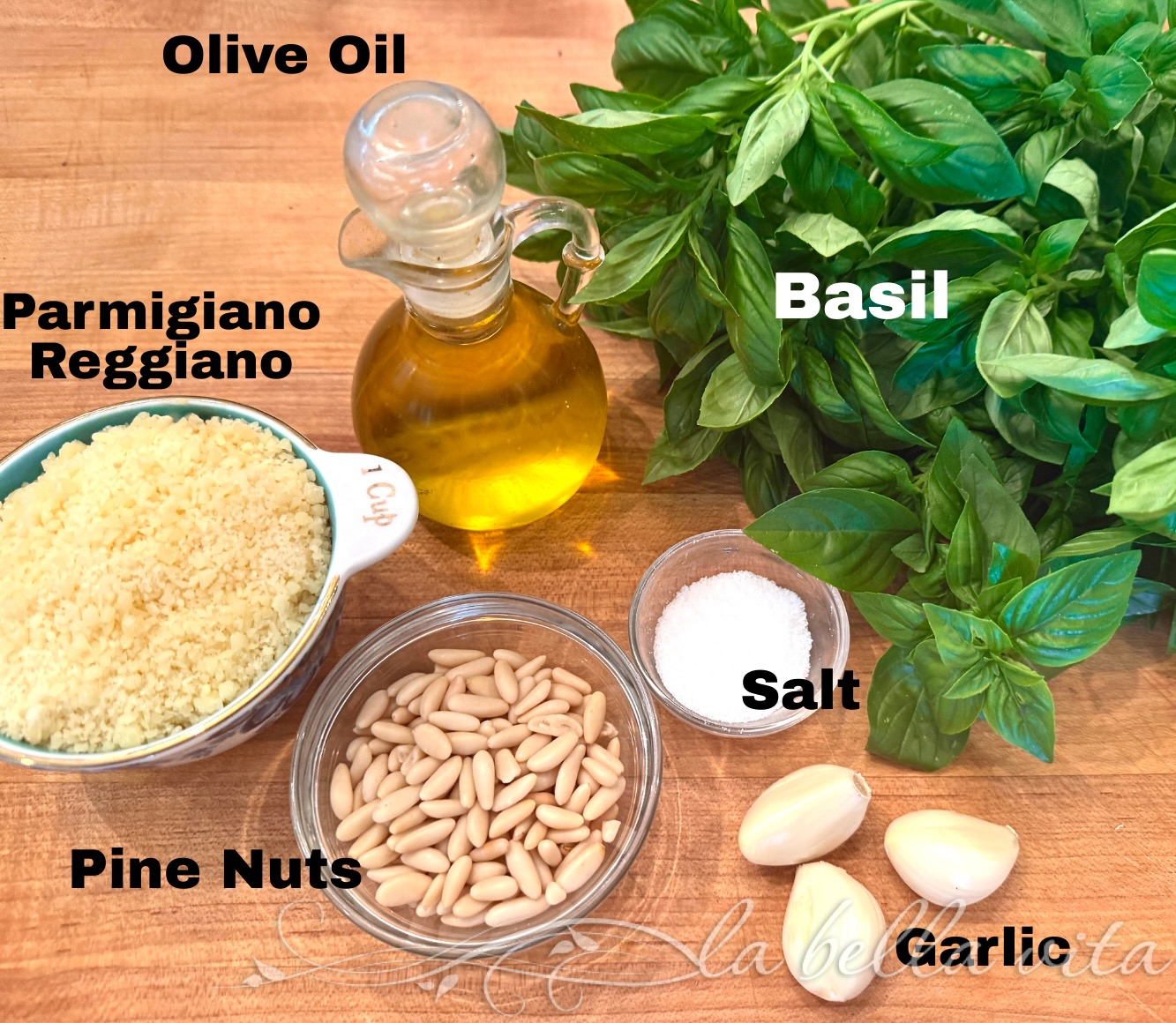
Use Simple Ingredients in Basil Pesto
I’m a purist when it comes to making pesto. I stick with the traditional ingredients: fresh basil, pine nuts (pignoli), freshly grated Parmesan, extra-virgin olive oil, fresh garlic, and sea salt.
Simple, fresh . . . delicious!
Because there are so few ingredients, the quality of each one really matters. Use the freshest basil you can find. Use good, imported Parmigiano Regiano cheese that you grate yourself, good-quality pine nuts, and an extra-virgin olive oil that you already love.
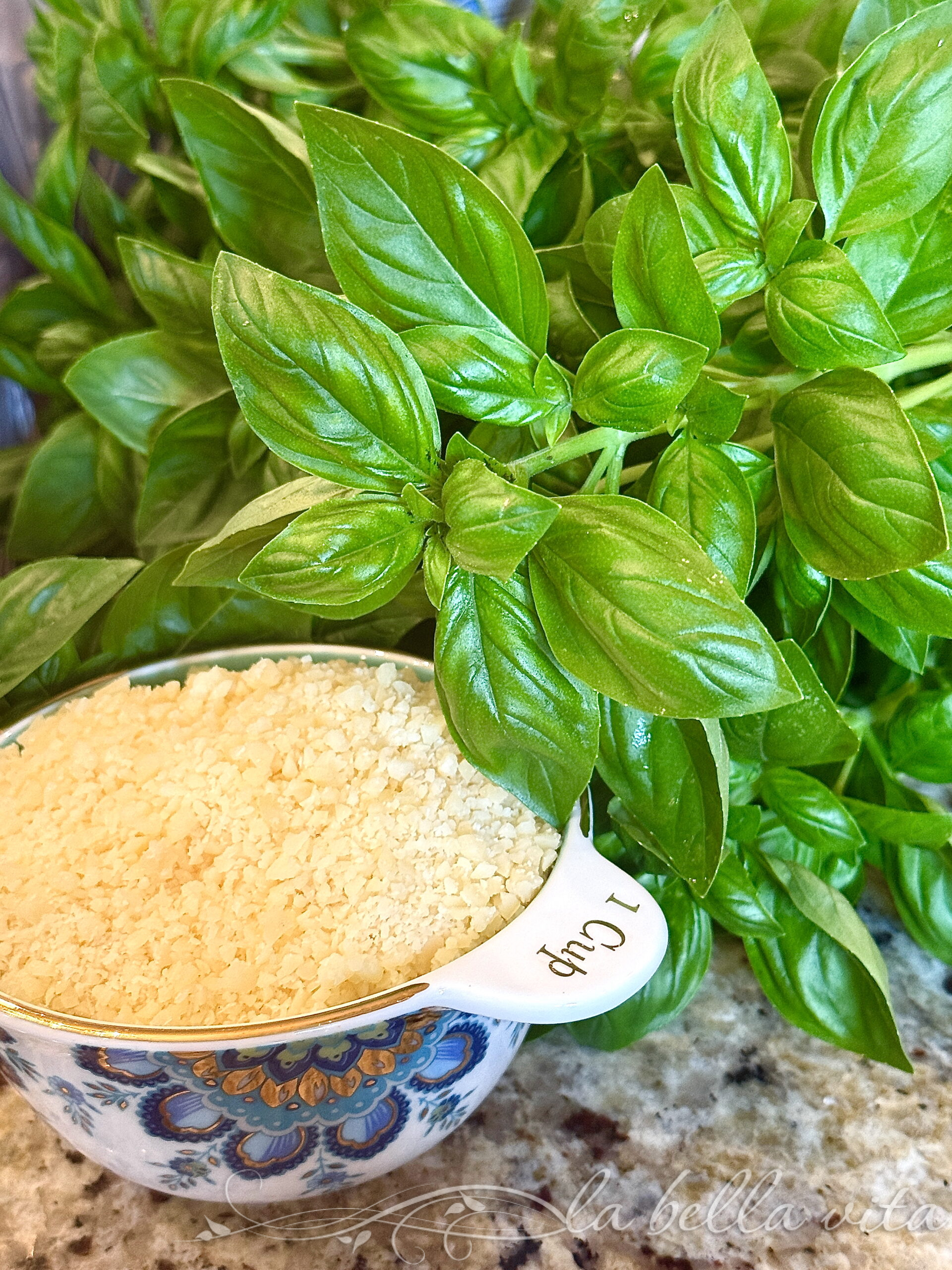
Just look at that gorgeous basil from my garden!
Mortar and Pestle—or Food Processor?
When I have the time, I love preparing pesto with a mortar and pestle. It feels old-fashioned and connects me to generations of Italian cooks who made it the very same way.
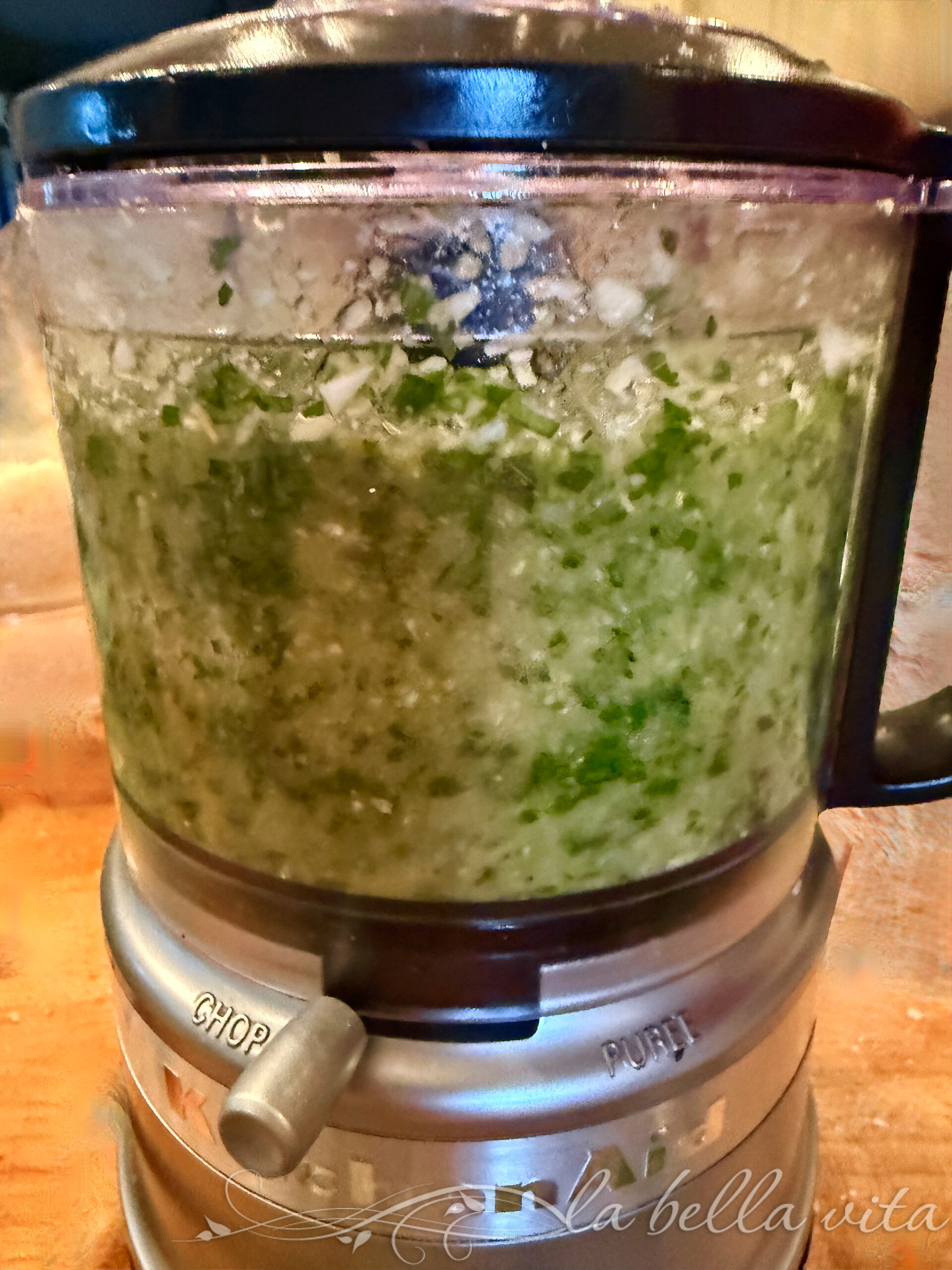
But when life gets busy (and mine certainly does), a food processor works beautifully. Some purists insist that a food processor diminishes the flavor and prevents the natural oils from being released properly. I believe that truly wonderful pesto has far more to do with the freshness and quality of the ingredients than with the method used to prepare it.
If you do use a food processor, pulse the ingredients in short bursts rather than letting the machine run continuously. This helps keep the basil from becoming overheated and gives you more control over the texture.
Be Careful Adding The Garlic
Another thing to remember: Resist the temptation to add extra garlic!
Since pesto is made with fresh garlic cloves, not garlic powder or flakes, even a little too much can overwhelm the basil’s delicate sweetness and leave the pesto tasting bitter. So don’t use more garlic than the recipe calls for! Start with the recommended amount. You can always add a touch more after tasting, but once too much raw garlic is in the bowl, there is no taking it back!
Treat Basil Gently
Traditional pesto is made with Genovese basil, but it’s ok to use another variety if that’s what is available. Any fresh, healthy basil leaves will still make a wonderful pesto.
Choose the smaller, tender leaves whenever possible, and avoid basil that is bruised, wilted, or beginning to turn dark. Most importantly, make sure the leaves are completely dry before you begin. Any lingering water will dilute the flavor and cause the pesto to spoil more quickly.
Don’t put your fresh basil in the refrigerator! Basil is happiest when it is growing in the sunshine—or sitting in a sunny kitchen window.
If you cut basil with a knife, it will darken/blacken very quickly, so use it fast before that happens. This is why it is recommended to ‘tear’ basil leaves with your hands.
Heat Basil Pesto Carefully
Pesto is a fresh, uncooked sauce, and its bright flavor is part of what makes it so special. Rather than cooking it directly over high heat, stir it into warm pasta, gnocchi, or vegetables just before serving.
When adding pesto to pasta, save a little of that precious pasta water before draining. A spoonful or two will help loosen the pesto, allowing it to glide beautifully over every piece of pasta without requiring a gallon of extra olive oil.
When adding to pasta, just stir in a small amount. It’s a powerful flavor that you don’t want to drown out the pasta.
Ways to Use Basil Pesto
With a some homemade pesto in the refrigerator, you can use it so many ways:
- Add to softened or melted butter to spread over corn on the cob, or warm bread
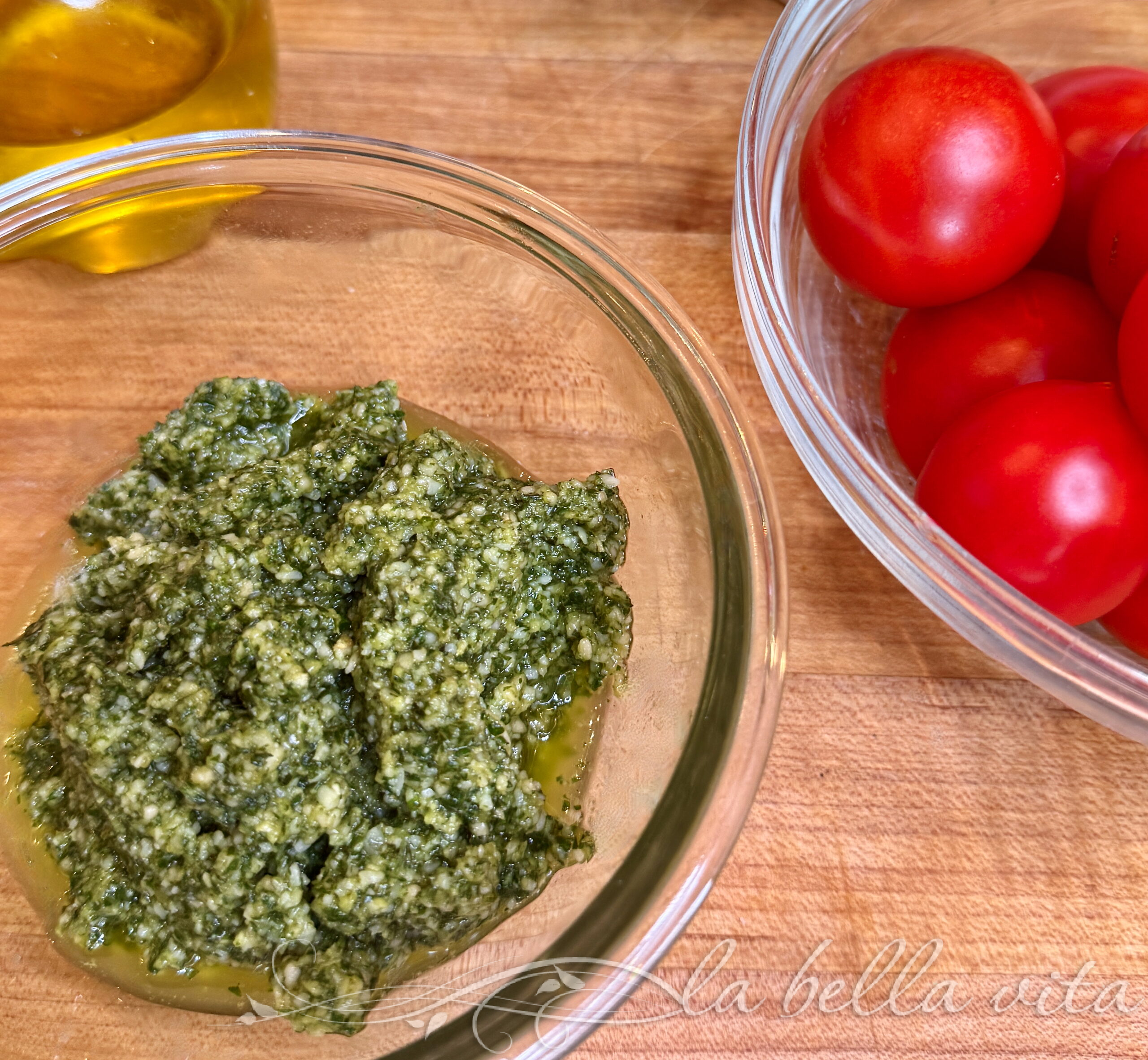
- Stuff into cherry tomatoes (see the video), celery, or endive lettuce leaves
- Add to bread dough before baking
- Place a dollop on minestrone or other Italian soups
- Stir into roasted potatoes
- Spread on pizza, focaccia, or panini
- Blend into risotto
- Mixed into a frittata or scrambled eggs
- Used in a vinaigrette or salad dressing
- Add to hummus
- Serve with grilled chicken, fish, or steaks
- and, of course, add it to your favorite pasta!
You can even stir a spoonful into mayonnaise for a delicious sandwich spread—or into softened butter to melt over warm bread, corn on the cob, vegetables, or grilled meat.
Make Big Batches and Freeze Some for Later
Pesto freezes beautifully, so when basil is abundant in the summer, I always make and freeze more than one batch. You’ll be so grateful when the garden is covered in frost, and you’re able to quickly pull out a little container of summer just ready to use in a delicious recipe!
Freeze pesto in small containers so you can thaw only what you need. Ice cube trays also work beautifully for creating individual portions. Once frozen, transfer the pesto cubes to a well-sealed freezer container or bag.
Remember to have plenty of good olive oil nearby. When storing pesto in the refrigerator or freezer, smooth the surface and pour a thin layer of olive oil over the top. This extra blanket of protection helps preserve its gorgeous green color and guards against browning and freezer burn.
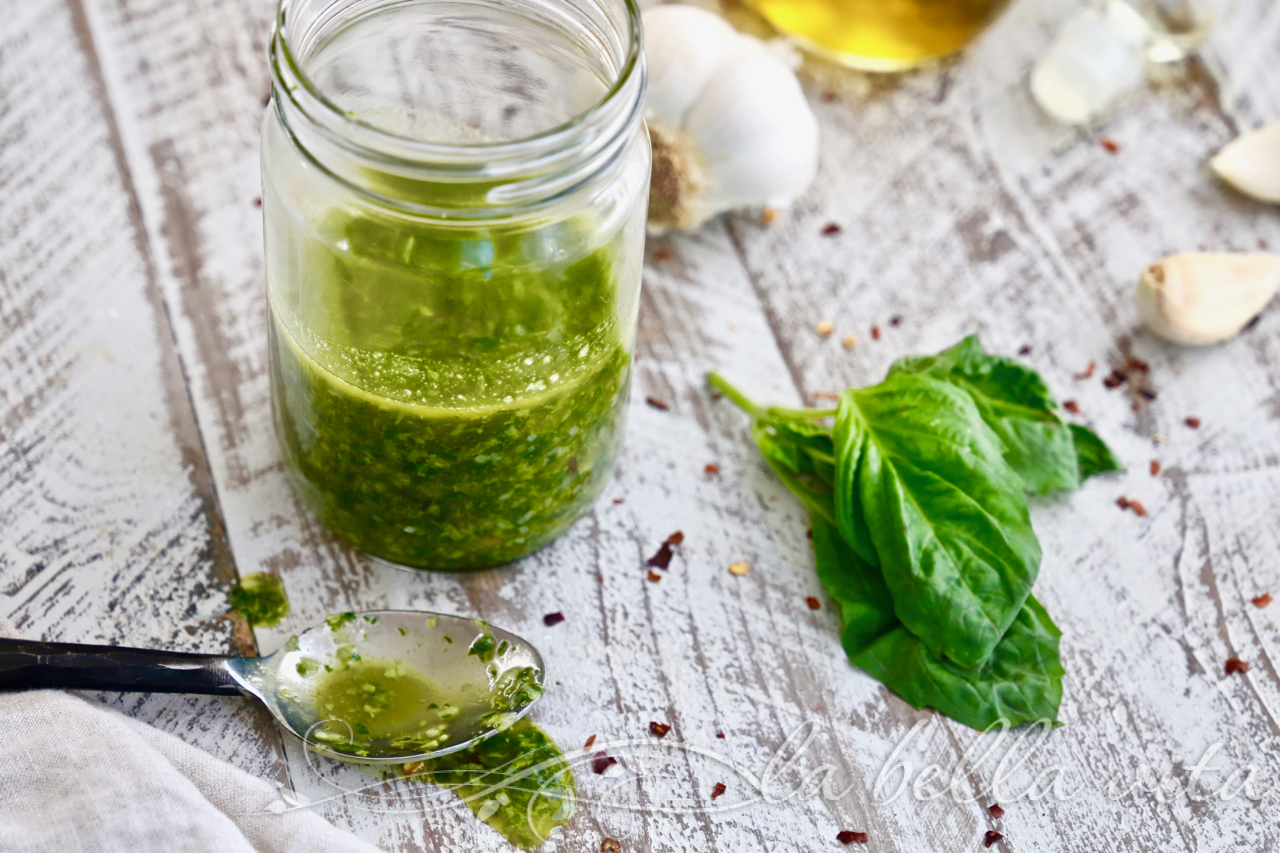
However you enjoy it, homemade pesto is one of those simple pleasures that make everyday food feel special. Fresh, fragrant, and bursting with the flavors of summer, it proves that the most memorable dishes are often made with just a handful of beautiful ingredients.
Fresh Basil Pesto
Ingredients
- 4 cups fresh basil leaves, washed and thoroughly dried (Genovese if possible)
- 2 - 3 garlic cloves
- 1/2 cup pine nuts, lightly toasted if preferred
- 1 cup freshly grated Parmigiano-Reggiano cheese
- 1 cup extra-virgin olive oil
- 1-1/2 tsp coarse sea salt
- extra olive oil to cover the top of the pesto
Instructions
- In either a food processor or with a mortar and pestle, blend/press the basil, garlic, pine nuts, Parmigiano cheese into a paste-like consistency.
- Slowly drizzle in the olive oil while the processor is still running.
- Add the sea salt.
- Blend thoroughly until a smooth consistency is achieved.
- Top off your jar/container with a layer of extra-virgin olive oil to better preserve the pesto.
- Pesto stays fresh in the refrigerator for one week in a covered container.
- For freezing pesto, simply fill an ice cube tray with pesto and freeze until solid.
- Once frozen solid, remove the cubes from the ice cube tray and wrap in plastic and return the cubes to the freezer.
- Use these pesto cubes in future recipes at ANY time of the year!
Notes
- You'll be SO happy that you did this in the summer!


I make it and it really tastes good.
I seem to make a different pesto recipe each summer. One year it was actually bland! I’m using yours this year…I know it is a winner 🙂 xo
Ciao, Roz! I found your blog and I love it! I grew up in Italy – and, I have Portmeirion Botanic Garden dishes! Everything is truly beautiful! Thank you for all the inspiration.
pesto is my weakness, I love it on EVERYTHING. This looks great
The photos are out of this world amazing and there is nothing better to my husband and I than fresh pesto. It is so invigorating and just perfect for pasta and meats and sandwiches! Love this version and will definitely be trying it soon!
this pesto looks so delish.
I always make basil pesto from scratch. And just enough to use it up every time;)
Roz – the pesto looks really bright and delicious.
Gorgeous! I love this freshness of these photoss and one of my favorites for topping chicken baked too!
Looks phenomenal!
what beautiful color and you’ll love this come winter time! Anne
Yummy, pesto is always the easiest way to use excess basil. This year mine is meek though.
I made mine last week and wish I’d had your post then, as I didn’t ensure the basil was dry. It’s not a big issue, but it did turn out a bit more watery than I like. When I poured the layer of olive oil on the top, some of it seeped down into the pesto, which I suppose is to be expected. Or is it? In any case, would you recommend using a little less oil in the recipe to compensate?
I have these same things to use up. Wonderful idea. Thanks.
i need to make some and good tip on the garlic