
The Talisman of Happiness – A Timeless Italian Cookbook
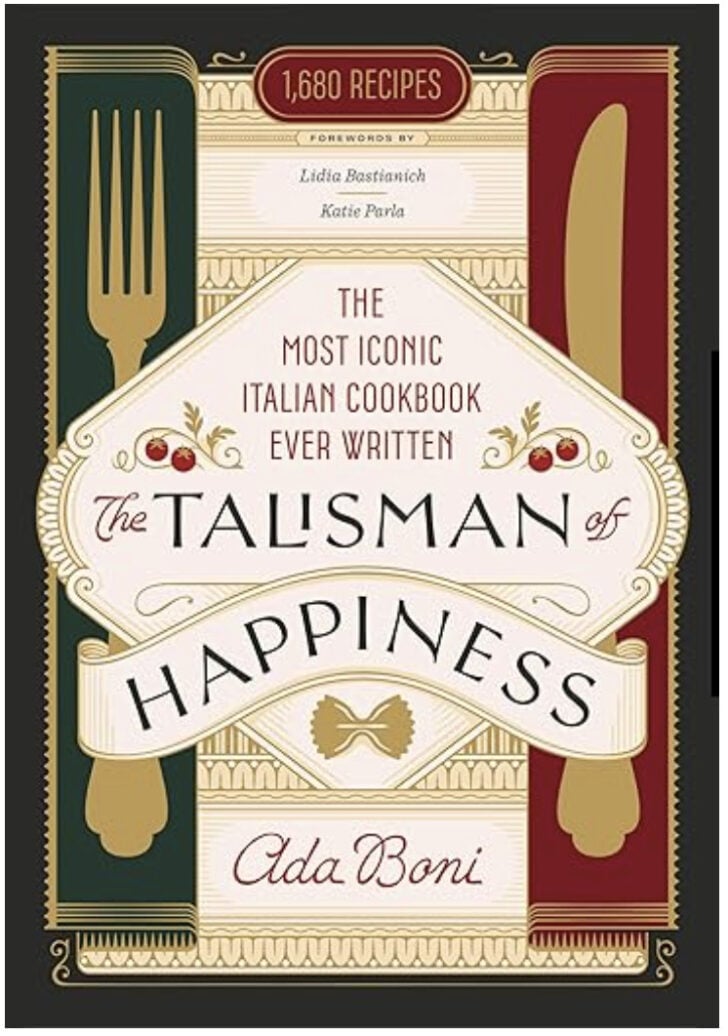
The Talisman of Happiness, first published in 1929, is still one of the greatest Italian cookbooks ever written. As the current #1 Best Selling Italian cookbook in both the U.S. and Canada, it’s massive in size and content, with over 1,600 recipes spreading over 850 pages! If you prepared a new recipe every day, it would take 5-½ years! Some cookbooks are fun to flip through once, to try a recipe or two from, and then slide them back onto the shelf . . . and often forget about them.
The Talisman of Happiness is not one of those books.
First published in Italy nearly a century ago, this remarkable cookbook by Ada Boni is the kind of book kept close at hand for anyone serious about Italian cooking. In this text, you won’t find trendy recipes that use kale (thank God), nor will you find any discussions about minimalist, deconstructed food that fills one inch of a dinner plate (thank God again). You won’t find any glossy photographs to impress you, nor any promises of new technology shortcuts.
Quite simply, it TEACHES you how to cook confidently, calmly, and with deep respect for tradition. This is exactly why it still belongs in your and my modern kitchen today.
What The Talisman of Happiness Is (and Is Not)
This is not a flashy, coffee‑table cookbook meant to dazzle at first glance. It won’t walk you through every step with long stories or modern conveniences. And it certainly doesn’t rely on trends or clever twists to hold your attention. In fact, it is quite old-fashioned in technique even before the oven thermometer was invented — thus the simple instructions of using a ‘hot’ oven or a ‘low flame’ stove. Even a handful of this or half of a glass of that! It’s teaches us to cook the old school way.
What it is feels much more familiar—like cooking the way it was always meant to be done.
The Talisman of Happiness is a working cookbook, written for people who love to cook and do so often. For those who enjoy feeding others whom they love and care about. For those of us who want to get it right in our efforts to do so. The recipes are practical and rooted in everyday Italian life. It now holds a prominent place on my list of the best Italian cookbooks!
This philosophy of everyday Italian cooking closely aligns with the goal of the Accademia Italiana della Cucina, which is dedicated to preserving authentic Italian culinary traditions.
Who Ada Boni Was – and Why Her Voice Matters
Ada Boni wrote with authority at a time when women’s voices were rarely given that space.
For historical background on Ada Boni and the significance of this book, see the detailed overview of Il Talismano della Felicità (here), which outlines the book’s publication history and lasting influence on Italian home cooking. Her tone is calm, assured, and no‑nonsense. She wasn’t trying to entertain or build a following—she was sharing knowledge that mattered.
Reading her recipes feels a bit like listening to someone who has cooked these dishes countless times and knows exactly what works and what doesn’t. There’s no fuss or exaggeration . . . just her own unique voice and guidance, rooted in experience.
Ms. Boni was born in Rome in 1881. As the editor of Preziosa, a monthly women’s magazine, she was far ahead of her time for women. When she wrote her cookbook, it became the ‘bible’ of Italian cooking. Marcella Hazan even gave credit to Ada Boni in “The Classic Italian Cookbook“, for her cookbook’s help in Ms. Hazan’s culinary journey.
Why This Cookbook Still Works Today
Despite being written nearly 100 years ago, The Talisman of Happiness feels surprisingly timeless because it focuses on technique rather than trends. But more importantly, the editors of the book highlighted Ada Boni’s voice . . . making her instruction feel more personal at a time when we are living so separately in a world of social media. In the little snippets of “Ada Says: “, you feel a special connection with a real person who has wisdom to share.
The book gives priority to essentials. Rather than trends or shortcuts, Ada Boni focused on foundations—broths, braises, vegetables, sauces, and everyday dishes cooked with care. Today, leading cooking authorities continue to emphasize these. Foundations of good cooking survive the times; we turn to them no matter the decade. Recipes for slow‑cooked meats, clear stocks, humble vegetables, and classic sweets never go out of style.
For modern cooks who feel overwhelmed by complicated recipes and endless substitutions, this book is grounding. It gently reminds us that if you understand the basics, you can cook well without fuss or fanfare.
How I Use The Talisman of Happiness in My Own Kitchen
My first copy of the Talisman is from my mother, who gave it to me the year I was born, 1955. Its pages are stained with liquid spills from years of use. My mother and my Nonna were razor-focused on teaching their bambina the best and basics of their native cuisine. I cherish it. Yet unlike the volume of today, it is quite small and abridged, and, as you can imagine, has only 2 pages of photos. I never reached for the Talisman for a trendy or new recipe, but rather when I wanted a recipe that was ‘solid’ and would guide me in the kitchen. When I moved away from home after graduating from college, I needed this book, along with numerous long-distance phone calls to my mother (no cell phones back in the 70s).
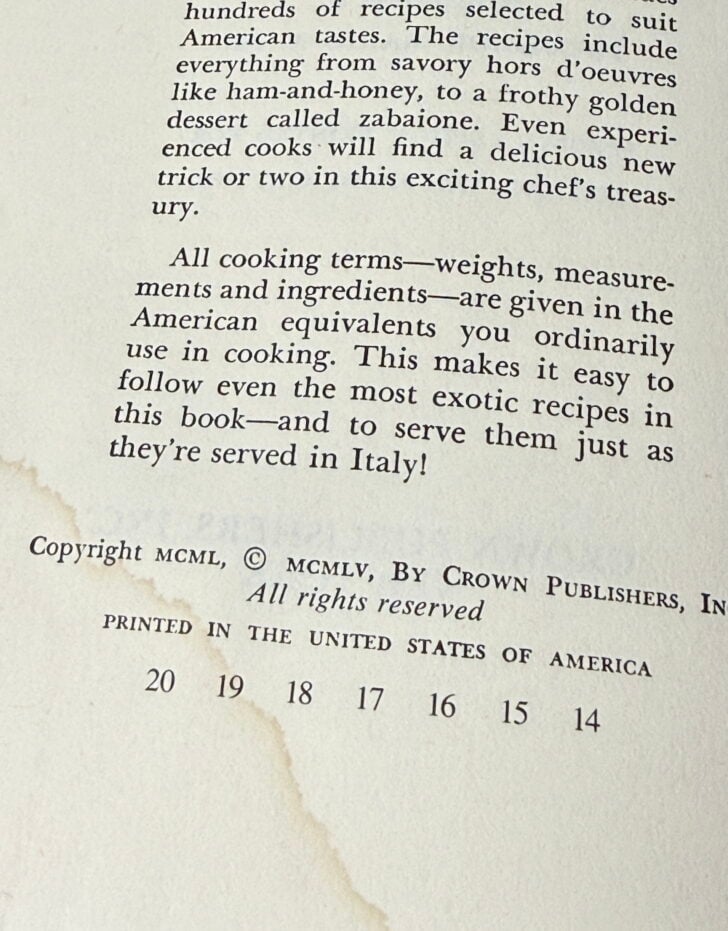
Sometimes I open it to double‑check a technique, measurement, or ingredient. Other times, I simply read it like a novel—letting the rhythm of traditional Italian cooking wash over me. It’s reassuring in the best way. Ada Boni’s philosophy reminds me that good cooking doesn’t need to be complicated to be meaningful.
“The Book That Taught Nonna To Cook Is Coming To America”
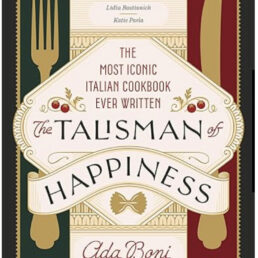
After reading a piece in The New York Times (September 29, 2025) announcing the latest edition of the Talisman, I immediately ordered my copy. There was much anticipation for the first edition to be published in English since the 1950s. The cover is beautiful and tasteful with soft, gentle embossing. It even contains a lovely red grosgrain ribbon to mark a page. When I hold it, I almost feel as if I have found a treasure book that one opens ever so slowly before the story begins.
Now that’s class!
Who This Cookbook Is Perfect For
Subtitled as “The Most Iconic Italian Cookbook Ever Written”, The Talisman of Happiness is especially well‑suited for:
- Home cooks who enjoy learning classic techniques
- Lovers of Italian food
- Anyone tired of over‑styled, overly complicated recipes
- Cooks who value simplicity, authenticity, and even some history!
It may not appeal to someone looking for fast, weeknight shortcuts. But for those who appreciate tradition, it is a true jewel.
Final Thoughts: A Cookbook That Earns Its Place
Very few cookbooks remain relevant, useful, and respected nearly a century after publication.
Its enduring reputation is reflected in the continued study and celebration of the book within the history of Italian culinary literature, where it is frequently cited as a foundational work, including in discussions of historic Italian cookbooks and culinary scholarship. The Talisman of Happiness has earned that distinction.
It doesn’t shout for attention or try to be modern. It simply teaches, preserves, and endures.
📖 Cookbook Recommendation
⭐ Find The Talisman of Happiness by Ada Boni 👉 here
Currently on sale as of 1/2/2026, save $17.00 for a limited time (not determined by me)
If you love classic Italian cooking rooted in technique, simplicity, and real kitchen wisdom, The Talisman of Happiness is a timeless cookbook worth owning — and using — again and again. This remarkable book remains one of the most authoritative guides to Italian home cooking ever written.
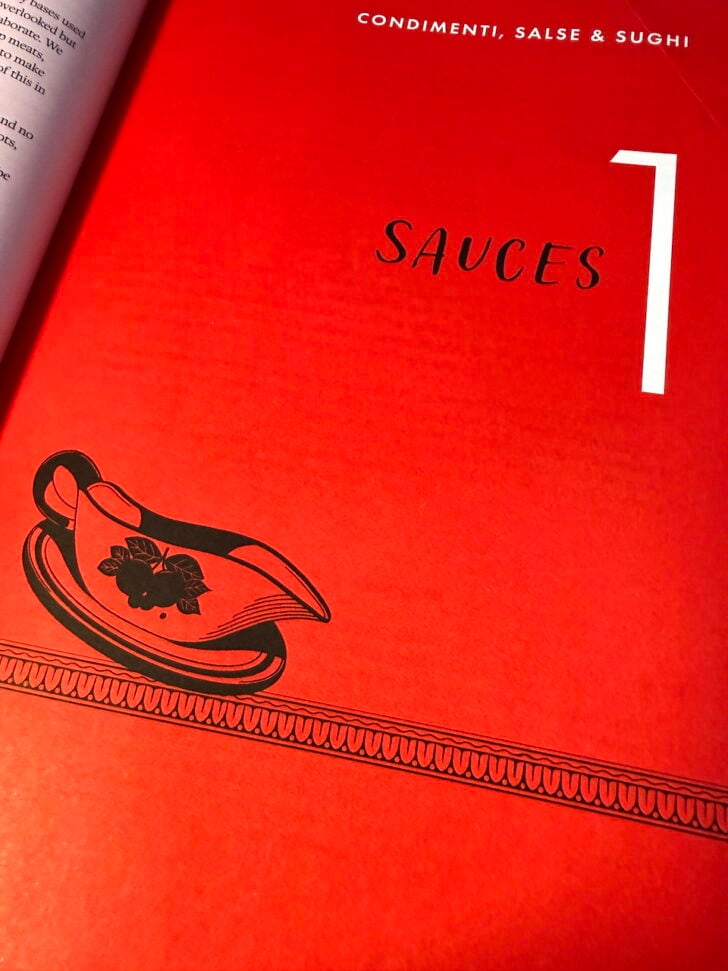
The recipe I chose to prepare from The Talisman is near and dear to my heart, as my family hails from Emilia-Romagna, the region of Bologna, where this famous recipe originated. It holds a special place at the front of the cookbook in the very first chapter!!
Ragù alla Bolognese inspired by Ada Boni
If there is one recipe in The Talisman of Happiness that truly captures the heart of this book, it is Ragù alla Bolognese.
Ada Boni’s ragù is not showy or rushed. It isn’t meant to be a quick sauce or a dramatic one. Instead, it is brief and well-developed, allowing the flavors to unfold while simmering slowly over time. The result is a sauce that feels balanced and comforting.
What I love most about her approach is the restraint. This is a Northern Italian sauce in which the meat is the star, enriched by complementary ingredients, with time doing most of the work. It’s the kind of recipe that reminds you why simple cooking, done well, is always enough.
When I make Ragù alla Bolognese in my own kitchen, I follow that same philosophy. I take my time, use high-quality ingredients, and let the sauce simmer quietly until it fills the house with its aroma. It’s not a recipe I rush — it’s one I return to, again and again, especially on slower days when cooking is such a joy.
(Inspired by Ragù alla Bolognese from The Talisman of Happiness by Ada Boni.)
Nonna’s Note:
Traditionally, this ragù is served with fresh egg pasta such as tagliatelle or pappardelle. Although Italians prefer to lightly coat their pasta, it’s more American to serve a generous amount of sauce. Finish with some freshly-grated Parmigiano-Reggiano and serve, savor, and enjoy.
Ragu alla Bolognese
Ingredients
- 3 oz ground beef
- 3 oz ground pork
- 3 oz ground veal, or use your preference for combining any of these 3 ground meats
- 4 Tbsp. butter
- 4 oz. pancetta
- medium yellow onion
- 1 large carrot
- 1 celery stalk + leaves
- 1 large garlic clove
- 200 ml beef broth or milk
- 1 Tbsp tomato paste
- 4 oz heavy cream
- 2 slices white truffle
- salt & pepper to taste
Instructions
- Place the ground meat with half of the butter in a large, deep, heavy saucepan (or pot).
- Mince the pancetta and chop your vegetables (onion, carrot, and celery).
- Add the vegetables and garlic clove to the ground meat and cook to brown.
- Add beef broth to cover and let it bubble down, then top up with more beef broth.
- Stir in the tomato paste and season with salt and pepper.
- Fill with enough water to cover all of the meats.
- Turn the heat to simmer and let it cook slowly for 3 hours and up to 4 hours.
- To finish, add 4 oz. heavy cream and a few slices of white truffle.
Notes
Have you cooked from The Talisman of Happiness before?
I’d love to know.
This post contains affiliate links. If you make a purchase, I may earn a small commission at no extra cost to you.


I have loved Ada Boni since I was a little kid visiting my Italian relatives (by marriage) in Vermont and New Hampshire. I have an original edition of the Talisman in Italian and use it quite often. I do need to get the new edition — I am quite excited about it.
Your blog is my main Italian cookbook
Sorry again for the typos!
Love you Roz!
Xo Anna and Liz
Love this recipe!! Sorry for the typo earlier. We can’t wait to try it! Grazie e Buon Anno Nuovo!!
Happy and Healthy New Year Roz! Love this recipe! We make bolognese all the time but love ok forward to trying this recipe. The heavy cream added sounds wonderful.