
White Bolognese ~ Ragu Bianco Sauce
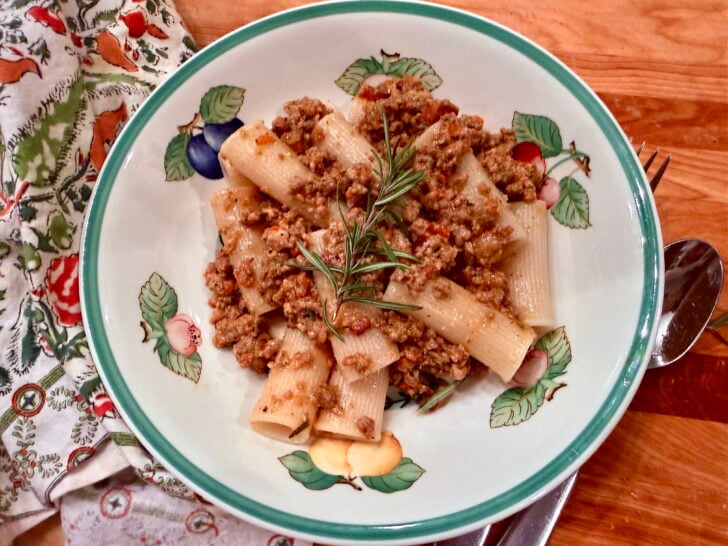
If you enjoy Bolognese sauce with its rich, meaty tomato base, you’ll really love White Bolognese, made without tomatoes yet still rich in flavor! White Bolognese is also called “Ragu Bianco” or “Ragu alla Bolognese Bianco” and is a classic slow-cooked meat sauce from Emilia-Romagna, in Northern Italy. Actually, White Bolognese was created BEFORE the red tomato-based Bolognese that most people know. That’s because tomatoes weren’t brought to Italy from the Americas until the 1500s and weren’t eaten until the 1600s, since they were believed to be poisonous.
This White Bolognese is simple yet rich, and layered with traditional Italian flavors that will satisfy your expectations for a truly delicious sauce. Beginning with a classic soffritto base, either pancetta or guanciale is sauteed next, followed by the addition of white wine, chicken broth, ground veal, pork, and Italian sausage. Finally, milk and cream, along with rosemary, sage, thyme, oregano, and nutmeg, are added to enhance the flavor. And lots of Parmigiano cheese! Together, the ragu simmers on low heat for several hours.
Besides not using any tomatoes in White Bolognese, there’s also a difference in the use of wine in the two Bolognese sauces. My family doesn’t use any wine in our family recipes. But if you insist on adding wine to your recipe, use red wine for the tomato-based version and use only white wine for white Bolognese. It makes a huge difference to add wine to the white version.
You’ll find that among the numerous recipes for White Bolognese, some cooks include milk and/or cream, and some don’t. Again, since my family is from Northern Italy, we just love milk or cream in our family recipes. And that includes White Bolognese. . . we use both to achieve a silky texture and a richer flavor that balances the wine’s acidic bite.
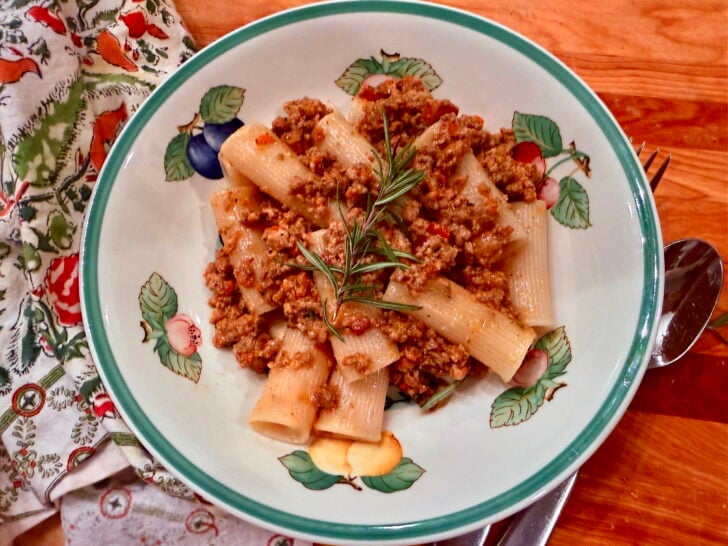
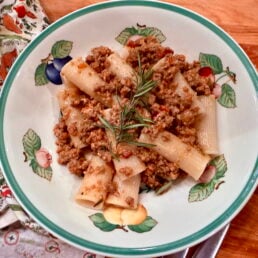
White Bolognese is perfect when paired with larger pasta shapes such as pappardelle or tagliatelle. Heavy sauces such as Bolognese work the best with pasta shapes with large tubes or crevices. Paccheri is my all-time favorite pasta, which are huge tubes that hold the ragu perfectly. It’s also delicious to use in lasagna, stuffed shells, and even stuffed peppers! Italians love simple meals, so a plain sandwich filled with this ragu would be outstanding for lunch (pranza)! For a creative antipasto, I’d set out a bowlful to spread on garlic toast points. I’ve also tossed freshly made gnocchi into this sauce, which was absolutely delicious.
Whatever large pasta you choose, remember to cook it until al dente (to the tooth firmness). For the perfect finish, garnish it with freshly grated Parmigiano-Reggiano cheese . . . you’ll have one of the most memorable pasta dishes ever.
I hope that you enjoy the video that I made for this recipe:
So let’s get to the kitchen and gather up the ingredients!
Andiamo a cucina! (Let’s go to the kitchen)
Ingredients for White Bolognese
- Extra virgin olive oil
- *Soffritto (classic Italian trio base of minced onion, celery, and carrots. You can also use shallots in place of onions. Sweet yellow Vidalia onions are the variety I use in all my recipes, but it’s totally up to you which variety you choose.
- Garlic – No savory Italian recipe could be without a kiss of garlic.
- Pancetta (or guanciale) – To amp up the flavor base of the ragu, crispy browned pancetta adds smoky notes of flavor to the sauce. I’ve added pancetta to my savory recipes for years because of the notable difference!
- Ground pork – a must for one of your ground meats, if you have to make a choicel
- Ground veal – just adds another layer of delicious flavor.
- Mild Italian sausage – use a milder version of Italian sausage; you don’t want it to overpower the other meats. You can also use plain pork sausage. If you prefer to leave either of these out, it’s OK. Remove the casing of each sausage, though.
- Ground beef chuck – optional. Use 80-20% fat for added flavor. However, again, use what you prefer.
- Chicken broth – I prefer to use chicken broth over beef broth, but this is another personal choice. I always have my own homemade version on hand, since I know the flavor is purer and there are no preservatives in homemade broth.
- Dry white wine – White Bolognese sauce requires wine, specifically white wine. The best to use is a dry white wine. Always use a wine that is good enough to drink and enjoy. Good varieties to use are: Pinot Grigio or Sauvignon Blanc.
- Whole milk – do not use any milk less than a full-fat whole milk. You want this sauce to be thick and creamy.
- Heavy cream – for the added richness that a Bolognese is famous for.
- A rind from a wedge of Parmigiano cheese.
- Herbs: Rosemary, thyme, sage, and oregano. Use fresh or dried; either works well. I cut herbs from my kitchen garden and use fresh herbs when they are in season. (Some recipes call for bay leaves, but my family dislikes the flavor of bay leaves so much that we never use them. It’s simply a personal preference).
- Freshly grated nutmeg – This is a favorite spice used in Northern Italian cuisine and adds a fantastic flavor dimension.
- Lemon peel – although optional, a very thin layer of lemon rind adds a little brightness to the overall flavor.
- Parmigiano Reggiano cheese – always grate a fresh wedge of Parmigiano just before using it at the time of cooking and/or serving. There’s no comparison to the tasteless pre-grated stuff; don’t buy that stuff sold in containers and pre-grated that is found in stores. You can substitute Grana Padano cheese if you prefer.
- Sea Salt – Use only a little, since the pancetta and Italian sausage are already salty enough. If possible, use freshly-grated sea salt.
- Freshly-cracked black pepper.
- Dried pasta – use a large pasta shape, preferably tagliatelle, pappardelle, paccheri, or rigatoni. You can also toss this with freshly made gnocchi.
How To Make White Bolognese
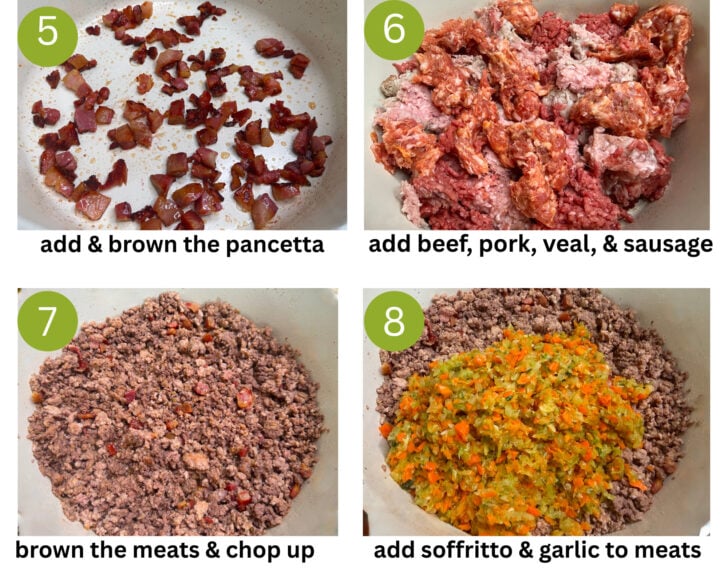
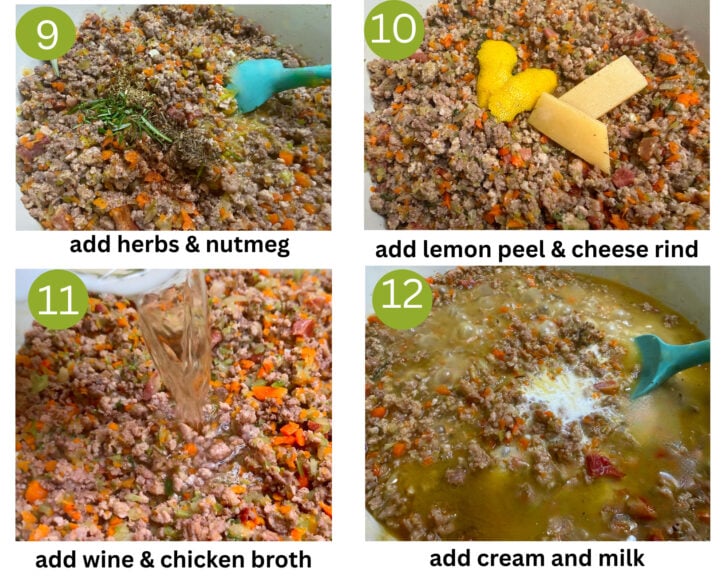
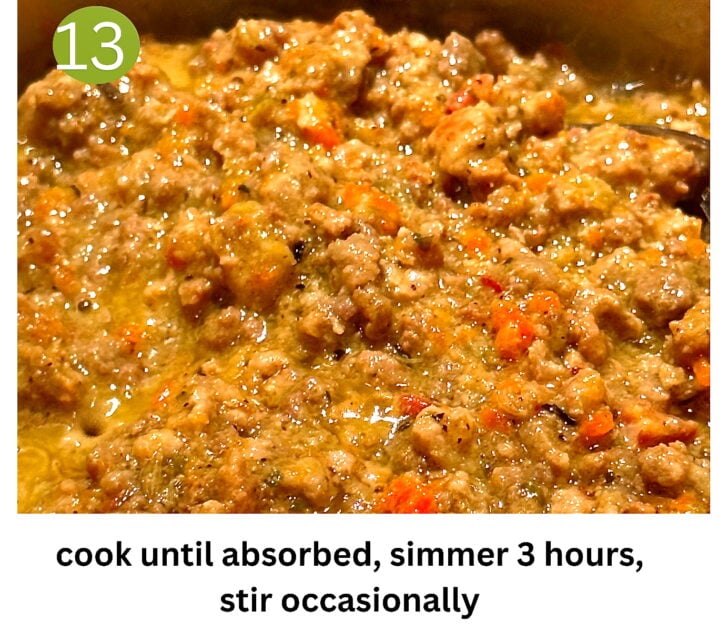
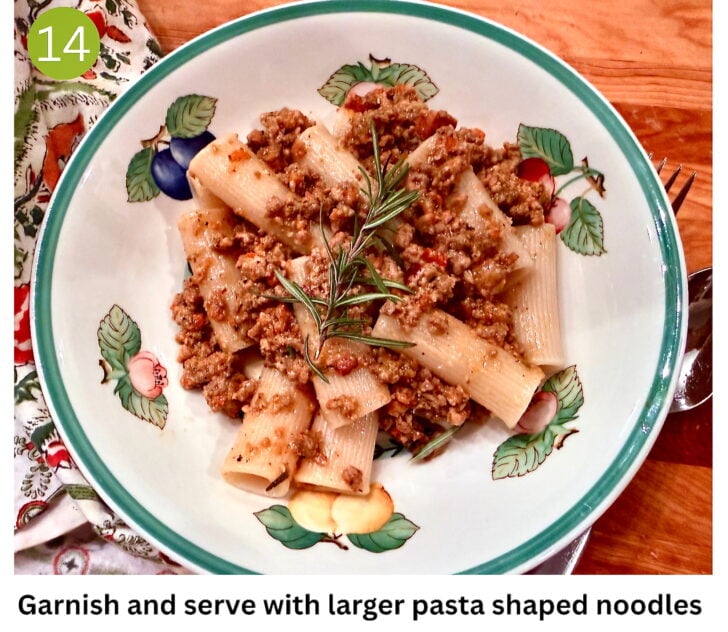
A free, printable recipe card is available for you below!
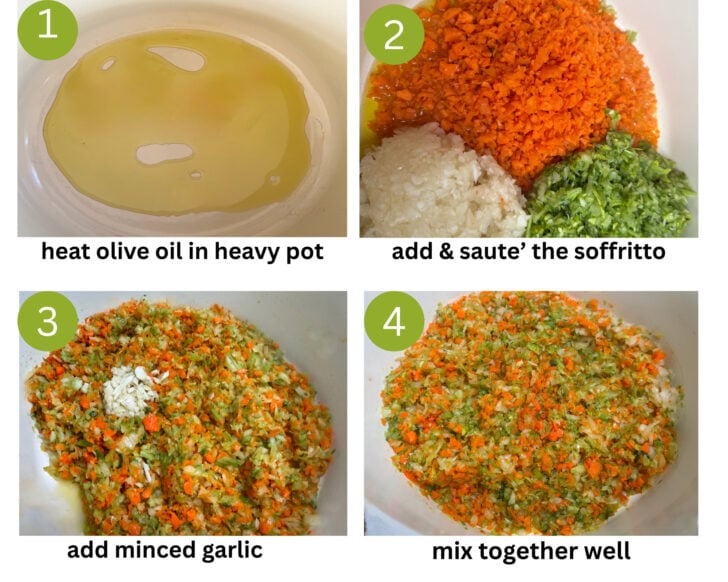
- Prepare the ‘soffritto’, saute’ the finely minced carrots, celery, and onion until translucent and aromatic, for about 5 minutes. Add the garlic and saute’ for another minute or two (do not burn the garlic). Set this mixture aside to add later.
- Cook the pancetta until a nice reddish-brown color
- Add the ground meats and thoroughly brown them in the hot pan.
- Add the ‘soffritto’ and garlic back into the hot pan with the meats.
- Add the herbs, spices, Parmigiano rind, and lemon peel.
- Add the wine and cook until well absorbed.
- Add the chicken broth and cook until well absorbed.
- Add the milk and cream,
- Add the freshly-grated Parmigiano cheese and mix in thoroughly.
- Cook on a low, slow simmer for 2 – 3 hours.
- Prepare the pasta later on, when the sauce is finished, about 15 minutes before serving.
Variations and Substitutions
- Traditionally, White Bolognese includes ground pork, veal, and beef or a combination of them. For a slightly leaner version of your ragu, it’s perfectly fine to swap out any of the meats for ground chicken, turkey, lamb, or rabbit, and still retain its rich, savory depth of flavors. We also like the addition of ground Italian sausage. For vegetarians, use lentils in place of the meat.
- Add or delete herbs and spices. For a spicier (hotter) flavor, add red pepper flakes. Many recipes call for a bay leaf. I leave out bay leaves from recipes because both my family and I dislike their strong flavor. You might want to add some oregano or marjoram. Just always include nutmeg.
- Enhance the sauce with diced mushrooms such as porcini, morel, crimini, or buttons.
- If you don’t prefer any dairy ingredients (milk and cream), then just leave them out. You can also use oat milk or cashew cream to make it dairy-free.
- It’s fine to substitute dry vermouth for the white wine, or add a splash of it.
Bella’s Tips for the Best White Bolognese
- Always use a “soffritto” of minced carrots, celery (and leaves), and onion
- Prepare this recipe slowly; making Italian sauces is all about having patience! White Bolognese needs to cook gently, just like the tomato-based version. If it doesn’t cook long enough, the ingredients don’t cling together into a thick, silky consistency. So savor the time in the kitchen with a glass of wine or a cup of coffee! No need to rush!
- During the few hours the sauce simmers on the stove, make sure the burner is on low to prevent burning the sauce. I also use a large round pizza tray placed between the stove burner and the bottom of the pot to provide an extra protective layer that helps prevent burning the sauce.
- Use a tall, wide pot or Dutch oven to prepare your White Bolognese.
- Cut, dice, or mince all ingredients to the same size, or as close as possible. This helps cook everything in the same amount of time and improves the appearance of the final dish. It’s easier to use a regular-sized or a mini food processor to mince the ingredients.
- Browning the diced pancetta at the beginning is very important for building rich layers of flavor. Be careful not to burn the pancetta during this step.
- Using a mix of meats adds a variety of flavor layers and makes an incredible difference. Sausage adds richness to the meat blend. Mix and chop up the meats into small pieces with a ground meat chopper.
- When adding herbs, you can tie sprigs of each herb together in a bouquet garni. This way, the herbs infuse nicely into the sauce, and you can easily remove them after the cooking is finished. Most of the time, I just toss in loose herbs, but the option is there to choose whatever method is best for you.
- The best DRY white wine options include Pinot Grigio and Sauvignon Blanc.
- Make sure that the wine is completely absorbed into the meat and that the pan is deglazed before adding any additional ingredients.
- Do not skip adding milk and cream — they are natural tenderizers and add silkiness to the sauce.
- When your sauce is ready to serve, if there is a lot of fat/grease floating on top, use a spoon to skim it off and discard it.
- Avoid using small pasta shapes such as mini shells, ditilini, pastina, etc. The sauce will overpower them.
- Always use a larger pasta shape, such as tagliatelle, pappardelle, paccieri, rigatoni, or even use gnocchi.
- It’s best to use non-flavored pasta, so save the spinach, beetroot, and butternut squash-flavored pastas for a simpler, less complex sauce that lets the pasta shine.
- Whenever making any pasta recipe, always reserve more pasta water and never throw it all away. Pasta water is critical to add at the end of any recipe because it gives the pasta a glossier appearance and helps the sauce coat the pasta better. The salty, starchy water gives the sauce a creamier consistency. Save more of the pasta water in the fridge to use later if the pasta seems to be drying out.
- This sauce, like any other Italian sauce, tastes better the next day, after all the ingredients have had a chance to get to know each other and blend perfectly.
White Bolognese (Bianco Ragu)
Ingredients
For the Soffritto
- 1 cup minced onion or shallots
- 1 cup minced carrots
- 1 cup minced celery + leaves
For the Remaining Bolognese Ingredients
- 1/4 cup extra virgin olive oil
- 5 cloves garlic, minced
- 1 cup diced pancetta (or guanciale)
- 1 lb. ground chuck
- 1 lb. ground pork
- 1 lb. ground veal
- 1 lb. mild Italian sausage, meat removed from casings
- 1 large Parmigiano cheese rind
- 1 cup heavy cream
- 1 cup whole milk
- 1/2 cup dry white wine
- 4 - 6 cups chicken broth
- 1 cup freshly-grated Parmigiano cheese
- 1 Tbsp. fresh rosemary, minced
- 1 Tbsp. fresh oregano, minced
- 1 Tbsp. fresh sage, minced
- 1 Tbsp. fresh thyme, minced
- ½ tsp. ground nutmeg
Equipment
- 1 ground meat chopper
- 1 mini food processor
- several sharp cooking knives
- mixing bowls in a variety of sizes
- a wooden cutting board
- 1 large, deep pot or Dutch Oven
Instructions
Prepare the Soffritto!
- Heat olive oil in a large pan/pot on low-to-medium heat.
- Add the onions, carrots, celery (and leaves) to the oil. Saute' until tender and somewhat translucent, and aromatic . . . for about 5 minutes
- Although not part of a soffritto, for this recipe, add the minced garlic to the soffritto and saute' for another 3 minutes. Adding garlic at the end helps prevent it from burning.
- When finished sauteeing, remove all of this from the pan and set it aside to use later on in the recipe.
For the Bolognese ragu:
- Add the pancetta to a medium-hot pan (it's ok to use the same pot/pan) and cooki until it is a reddish-brown color (about 10 minues), being careful not to burn the pancetta. It is fine to substitute guanciale or thick bacon.
- When pancetta (or guanciale) is finished cooking, add all of the meats to the pan and begin to saute on low to medium heat. Break up all of the clumps of meat into a 'minced', ground meat texture. Mix the meats together thoroughly. For about 15 minutes, stir occasionally, and continue to break down any clumps.
- At this time, I add seasonings that I believe enhance any recipe: Accent, Nature's Seasons, and Mrs. Dash Original Flavor Seasons. I sprinkle a good amout all over the meats.
- When the meats are a nice brown color, add the soffritto (plus garlic) back into the cooked meats and mix everything thoroughly.
- Add the herbs and the ground nutmeg, the lemon peel, and the Parmigiano rind.
- Add the dry white wine and stir until well absorbed.
- Add chicken broth one or two cups at a time, stir and allow it to be well-absorbed before adding the next round of chicken broth. Always add broth first and allow to fully absorbed after every addition of broth.
- Add the cream and milk.
- Add the freshly-grated Parmigiano cheese. You can add more later if you prefer.
- Set the heat on low and simmer the Bolognese ragu for 2 - 3 hours, preferably 3 hours. Keep your eyes on it and stir occassionally so that the sauce does not burn. Also use a spoon to skim off any grease/fat that rises to the surface of the ragu while cooking; this will happen more near the end of cooking.
- Add salt and pepper to taste. Add any more ingredients you feel you prefer, such as more Parmigiano cheese, more herbs and/or nutmget, more cream, more broth, etc.
- Serve with wide, large pasta noodles that have been cooked al dente. Add pasta water to the sauce to achieve a more silky desired consistency. Serve on top of the pasta, or serve thoroughly 'mixed into' the pasta with extra sauce served and passed around to guests who want more sauce.
Notes
- Dry white wine options that work well in this Bolognese are:
- Pinot Grigio
- Pinot Gris
- Sauvignon Blanc
- Soave
- Yes, you can serve this Bolognese with any pasta that you prefer, and always use what you enjoy the most. However, due to the heavy nature of this ragu', here are some recommendations for you that I've been taught to use:
- Paccheri (hands-down my favorite pasta shape EVER) - huge, wide noodles with a great big hole or tube that the ragu fills, so you get a lot of sauce with every huge noodle! So awesome!
- Rigatoni - The same results, with a slightly smaller pasta shape, and easier to find in a local store.
- Pappardelle - nice wide 'long' noodles that the ragu sticks to nicely.
- Tagliatelle - not as wide as pappardelle, but the ragu hugs the pasta nicely too.
- I've also made this with gnocchi, and it works quite well with these pillowy soft dumplings!
- White bolognese is easy to freeze without any pasta.
- When reheating, add more cream or broth if it feels too dry.
- Add some pasta water from the pot your pasta was cooked in so the sauce clings better to the pasta and achieves a more silky, glossy texture.
- Always good White Bolognese on a gentle, slow simmer.


Oh boy Roz, I would be all over this dish. If I bring the wine can I pull up a chair and join you? Fabulous, comforting dish.
Velva
Very interesting. Never knew this existed but it sounds delicious.
My husband loves bolognese, but always just the one with tomatoes. Can’t wait to try this one out for his next pasta meal.
Angie, My husband feels exactly the same about bolognese as he does; however, this is a very close second. It’s super yummy and very filling. experiment with it and I know yours will be amazing!
Ciao,
Roz